Dehumidifier with a bucket or a continuous drain (hose or pump)
A bucket needs emptying every day or two. A hose or built-in pump lets a dehumidifier run unattended in a basement. Compare convenience, cost and the risks of each setup.
As an Amazon Associate we earn from qualifying purchases. Product links on this page are affiliate links: buying through them costs you nothing extra and does not change what we recommend.

Frigidaire 50-pint Wi-Fi dehumidifier
Best for: Damp basements.
- App alerts and control
- Common size for basements
- Bucket needs emptying unless you use a drain
- Check pump or gravity drain options
Name, photo and listed features checked on Amazon.com on November 14, 2026. We have not tested it; see how we choose.
Which one should you pick?
The bucket is the simplest setup, and the automatic shutoff stops the unit when it fills.
A continuous drain means the unit does not stop when the bucket fills and humidity creeps back up.
A plain gravity hose is enough, with no pump, motor or extra cost.
A model with a built-in pump or an external condensate pump lifts the water to a sink, standpipe or outside.
A bucket model needs no hoses run to drains and nothing that could leak onto a floor you do not own.
Bucket (manual empty) vs Continuous drain (hose or pump)
| What changes | Bucket (manual empty) | Continuous drain (hose or pump) |
|---|---|---|
| How water leaves | Collected in a removable bucket, usually emptied by hand | Leaves through a hose by gravity or by a pump through a hose |
| What happens when full | Automatic shutoff, per ENERGY STAR; humidity rises until you empty it | Keeps running as long as the hose is clear and the drain works |
| Needs a drain nearby | No | Gravity: yes, below the unit. Pump: lifts water to a sink, standpipe or outside |
| Leak risks | Spills when carrying a full bucket; overflow if the float switch fails | Kinked, loose or frozen hose; pump failure. A leak sensor under the unit is a good idea |
| Upkeep | Empty, rinse the bucket, clean the filter; mold can build up in a bucket left damp | Check hose and pump for clogs; clean the filter; keep hose away from cords |
| Fit for a basement | Poor if you travel or visit once a week | Good, if you add a leak sensor |
| Smart control | A smart plug cannot empty the bucket, so a full bucket still stops the unit | Can run on a schedule or with a humidity sensor and a smart plug that restores power |
Start with how often you will actually empty the bucket
ENERGY STAR describes the standard portable dehumidifier as a unit with a removable plastic bucket, warning lights and an automatic shutoff when the bucket is full. That shutoff protects the floor, but it also means the unit stops removing moisture. In a damp basement, a dehumidifier can fill a bucket in a day or two. If you are not there to empty it, the unit is switched off for most of the day.
The EPA advises keeping indoor humidity below 60% and, if possible, between 30% and 50%. A bucket that fills overnight and stays full for a weekend lets humidity creep up again. A continuous drain removes that failure point.
Gravity hose first, pump second
Many portable units have a hose fitting so the water drains to a floor drain or sump pump, as ENERGY STAR points out. A gravity hose costs almost nothing, but the unit must sit higher than the drain and the hose must slope down without kinks. If your drain is higher than the unit, or there is none, you need a pump.
A pump comes in two forms: a model with a built-in pump or a separate condensate pump that sits beside the unit. A built-in pump has fewer parts to place. A separate pump lets you keep a simple unit and swap the pump if it fails. Whichever you choose, check the pump’s lift height in the specification, route the discharge hose to a sink, standpipe or outdoors, and follow the maker’s instructions for how to secure it.
Safety and failure checks
- Keep hoses away from electrical cords and connections. ENERGY STAR specifically warns against setting up drainage near electrical circuits.
- Put a leak sensor under the unit. A hose that pops off, kinks or freezes sends water across the floor instead of into a drain. A battery sensor with a loud siren is inexpensive insurance.
- Watch the temperature. ENERGY STAR notes that frost can form on the coils when the air drops below 65°F, which can cause short cycling. Units with an anti-frost sensor switch off at a set low temperature. Otherwise turn the unit off to defrost.
- Measure humidity yourself. The EPA says an inexpensive humidity meter, roughly $10–$50, tells you whether the unit is keeping up. Without one you are guessing.
Where a smart plug or sensor fits
Do not use a plug-in timer to “fix” a full bucket. When the bucket fills, the unit stops even if the plug has power. A smart plug is useful with a continuous drain, because many units stay off after a power loss until you press the power button, so check that yours resumes by itself. For the broader picture of sensors, thresholds and plugs, see our guide to smart humidity control and the sump pump alarm guide if your drain empties into a pit.
If you are choosing the unit itself, our guide to dehumidifier capacity shows how to match pints per day to your space.
Products that match each need
Basement you rarely visit
What to look for: built-in pump or hose fitting, lift height listed, automatic shutoff, humidistat, ENERGY STAR

Existing dehumidifier with no pump
What to look for: external condensate pump with a float switch, discharge hose included, listed lift height
Protection against hose or bucket failures
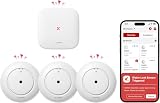
What to look for: water leak sensor with a loud siren and a phone alert, flat shape for the floor
Frequently asked questions
Can I run a dehumidifier into a floor drain?
Many portable models have a hose fitting for this, according to ENERGY STAR. The unit must sit higher than the drain so water flows downhill through a hose that is not kinked.
Does a built-in pump make a dehumidifier more expensive?
What happens when the bucket gets full?
The unit shuts off automatically, so humidity rises until someone empties the bucket. That is the main reason basements benefit from a continuous drain.
How do I know if my humidity is low enough?
The EPA advises keeping relative humidity below 60%, ideally between 30% and 50%. A humidity meter shows the reading, and your unit’s own display may differ from a separate meter.
Sources
- ENERGY STAR — Dehumidifiers
- U.S. EPA — A brief guide to mold, moisture and your home
- U.S. EPA WaterSense — Fix a Leak Week
- Amazon.com listing: Frigidaire 50 Pint Dehumidifier w/Wifi (ASIN B0FP1L6W89), checked November 14, 2026
Product names, photos and listed features were checked on the Amazon.com product pages on November 14, 2026. Prices and availability change; the retailer page is always the reference.
Related pages
 GuideWhich dehumidifier size do you need for a basement?Choose capacity by how damp the space feels and how large it is, not by square footage alone. Use the ENERGY STAR pint chart, then check humidity…
 GuideSmart humidity control: humidifiers and dehumidifiersKeep indoor humidity between 30% and 50%, and below 60% at all times. Learn how to measure it, size a basement dehumidifier with continuous drain and…
 GuideSump pump alarm and backup optionsA high-water alarm warns you before the basement floods, a power alert tells you the pump has no electricity, and a battery backup keeps pumping.…
 KitWater leak protection kit for a houseFive leak sensors, an automatic shutoff valve and a hub: the shopping list to catch leaks early and stop them before they flood the floor, with…KitLaundry room smart kitLeak sensors, cycle-done alerts and a humidity sensor for the laundry room, plus the dryer vent and hose upgrades that cut the usual fire and flood…
 GuideTime-of-use rates: automating your home around peak hoursOn a time-of-use plan, the same kilowatt-hour costs more at peak hours. Learn how to read your rate, which loads are worth shifting and how to…