Where to place carbon monoxide detectors
Put a CO alarm on every level and outside every sleeping area. Here are the spots to avoid, what to do about an attached garage and generator, and when to replace the alarm.
As an Amazon Associate we earn from qualifying purchases. Product links on this page are affiliate links: buying through them costs you nothing extra and does not change what we recommend.
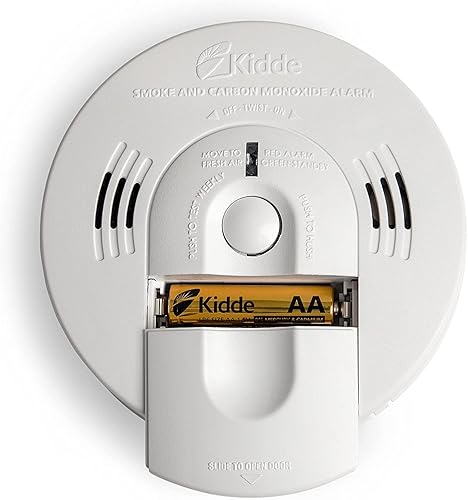
Kidde hardwired smoke and CO alarm
Best for: Replacing existing hardwired, interconnected alarms.
- Voice says whether it is fire or CO
- Keeps working during a power failure
- Ionization sensing only: consider photoelectric alarms too, near bedrooms and kitchens
- AA backup batteries need replacing every year
Name, photo and listed features checked on Amazon.com on November 14, 2026. We have not tested it; see how we choose.
Why placement matters
Carbon monoxide (CO) is a colorless, odorless gas made when fuel burns incompletely. The CPSC reports that more than 200 people in the United States die every year from accidental non-fire CO poisoning linked to consumer products, and more than 100 of those deaths involve portable generators. Symptoms such as headache, dizziness, weakness, nausea and confusion are easy to mistake for the flu. An alarm is the only way most people will know, especially while asleep, so it has to be where it will wake you.
The basic rule: every level and outside sleeping areas
CPSC advice: install battery-operated CO alarms, or alarms with battery backup, on every level of the home and outside sleeping areas. In practice that means:
| Location | Why |
|---|---|
| Hallway outside the bedrooms | So the alarm can wake sleepers; add one inside a bedroom if the door is usually closed or the maker advises it |
| Each additional floor, including the basement | The furnace, boiler or water heater is often there |
| Near the door from an attached garage (inside the house) | Exhaust can enter the house from a garage |
| Near a fireplace or fuel-burning room heater, but not touching it | Extra warning near a CO source; keep the distance the maker states |
The first two rows come from CPSC’s rule; the last two are common sense for homes with a garage or a fuel-burning appliance, and the alarm’s manual may add distances.
Spots to avoid
- Next to a heating vent or air supply, where moving air may affect readings.
- Behind furniture or curtains that could cover the alarm.
- Directly above a fuel-burning appliance or in an area with a lot of steam, such as inside a bathroom, unless the maker says it is allowed.
- Outdoors, in a vented garage or in a damp crawlspace unless the alarm is rated for it.
The maker’s manual decides the final height. CPSC says alarms can be plugged in or mounted high on a wall, so do not assume a ceiling spot is right for your model.
Battery backup and the type of alarm
CPSC recommends alarms with battery backup, so the alarm keeps working in a power outage, exactly when people run generators and fuel-burning heaters. Pick an alarm listed to UL 2034, the standard UL Solutions describes as covering single and multiple station CO alarms; CPSC says to install an alarm that meets the current UL 2034 standard. Combination smoke and CO units meet both UL 217 and UL 2034, which saves ceiling space; see wireless interconnected smoke alarms.
Sources you can control
- Generators: CPSC says to use generators outside only, at least 20 feet from the home, with the exhaust facing away. Never run one inside a home or garage, even with the doors and windows open.
- Cars: never leave a car running in an attached garage, even with the garage door open.
- Heating system: have it professionally inspected and serviced every year; the U.S. Fire Administration makes the same annual-inspection point for heating equipment and chimneys.
- Gas appliances and water heaters: have a licensed professional repair them. Do not tinker with gas lines or venting yourself.
Testing, lifespan and replacement
CPSC notes that pressing the test button checks that the circuitry works, not the accuracy of the sensor. Test it as the manufacturer instructs, check the batteries regularly and replace the alarm at its recommended replacement age, which is printed on the alarm or given in the manual. CO sensors wear out, and many alarms chirp or show an end-of-life message. Write the replacement date on the alarm when you install it. A full shopping list for a three-bedroom home is in the smart smoke and CO alarm kit; for kitchen false alarms, see smoke alarm near the kitchen. For a home with smart alerts, FTC basics apply: unique password and two-factor authentication on the account.
If the alarm sounds
CPSC says that if you suspect CO poisoning you should get to fresh air right away and then call 911. Do not go back in to look for the source. Open the door, leave, and call. Have the equipment checked by a professional before using it again.
Products that match each need
Bedroom hallway and every floor
What to look for: UL 2034 listing, battery backup, digital display of peak reading, end-of-life alert, plug-in or wall mount per manual
Smart home with phone alerts
What to look for: Wi-Fi, Thread or hub-based notification, local siren that does not depend on internet, UL 2034 listing, battery backup
Smoke and CO in one device
What to look for: combination alarm listed to UL 217 and UL 2034, voice location alert, interconnect with the same family
Attached garage or fuel-burning heater
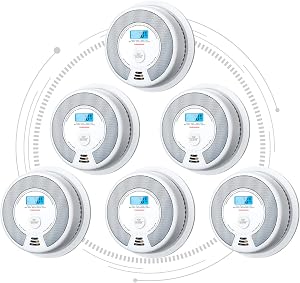
What to look for: alarm with peak memory, replaceable or 10-year sealed battery, CO listing and manual that allows the location
Frequently asked questions
How many carbon monoxide detectors do I need?
At least one on every level of the home and one outside each sleeping area, according to the CPSC. Larger homes and homes with an attached garage or fuel-burning appliance may need more.
Should a CO detector be near the floor or the ceiling?
Follow your model’s manual. CPSC says CO alarms can be plugged into an outlet or mounted high on a wall, and should be kept away from vents and anything that could cover them.
Where should I never place a carbon monoxide alarm?
Not behind furniture or curtains, not next to a heating vent, and not where the manual says moisture or temperature are outside its rated range.
How far from the house should a generator be?
The CPSC says at least 20 feet from the home with the exhaust pointing away, and never inside a home or garage, even with doors open.
Sources
- U.S. Consumer Product Safety Commission — Carbon Monoxide Information Center
- U.S. Consumer Product Safety Commission — Carbon monoxide questions and answers
- UL Solutions — Fire, smoke and gas device certification (UL 217 smoke alarms, UL 2034 CO alarms)
- U.S. Fire Administration (FEMA) — Heating fire safety
- Amazon.com listing: Kidde Hardwired Smoke & Carbon Monoxide Detector, Battery Backup, Interconnectable, LED Wa (ASIN B086S4Y9H5), checked November 14, 2026
- Amazon.com listing: X-Sense Interconnected Smoke and CO Detector, SC07-W, 6-Pack (ASIN B09FXXQLJM), checked November 14, 2026
Product names, photos and listed features were checked on the Amazon.com product pages on November 14, 2026. Prices and availability change; the retailer page is always the reference.
Related pages
 GuideWireless interconnected smoke alarms: what to know before buyingWhen one alarm senses smoke, every alarm in the house sounds. Here is where to put them, why brands usually cannot be mixed and when a hardwired…KitSmart smoke and CO alarm kit for a 3-bedroom homeSix interconnected alarms, three of them smoke and CO combinations, plus a fire extinguisher and an escape plan: a shopping list that covers every…
 ComparisonSmart smoke alarm vs smoke alarm listenerA smart alarm replaces your old alarm. A listener adds a phone alert to alarms you already own. Compare cost, interconnect, CO coverage, wiring and…
 KitWater leak protection kit for a houseFive leak sensors, an automatic shutoff valve and a hub: the shopping list to catch leaks early and stop them before they flood the floor, with…
 CalculatorSpace heater cost calculatorEnter the heater’s watts, hours of use and your electricity rate to see what a space heater costs per hour, day, month and season, and how that…
 GuideHow to make a ceiling fan smartLearn the three ways to add smart control to a ceiling fan, why a light dimmer is the wrong switch and how to check your wiring before you buy.…
 Kidde hardwired smoke and CO alarm