Security camera night vision: infrared vs color
Infrared night vision shows black-and-white video in total darkness, while color night vision needs some light. Learn what each does, why glass ruins it and which one suits your doors.
As an Amazon Associate we earn from qualifying purchases. Product links on this page are affiliate links: buying through them costs you nothing extra and does not change what we recommend.

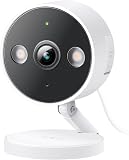
Wyze Cam v4
Best for: Budget coverage of a porch, garage or room.
- Low price for indoor or sheltered outdoor use
- Spotlight helps color night video
- Plug-in power: needs an outlet nearby
- 2.4 GHz Wi-Fi only
Name, photo and listed features checked on Amazon.com on November 14, 2026. We have not tested it; see how we choose.
How infrared night vision works
Most security cameras with night vision carry a ring of infrared LEDs around the lens. At night, a filter in front of the sensor moves out of the way, and the LEDs light the scene with near-infrared light that people cannot see but the camera can. The result is a monochrome image. Reference sources describe active infrared systems as using illumination in the 700 to 1,000 nanometer range and producing a monochrome image on a normal display, which matches what you see on a camera feed. These systems are commonly found in residential security.
Two practical points follow. IR range depends on the number and power of LEDs and on what the light bounces off: a wall, a car and a tree return light well, while an open yard returns almost none. And IR cannot show color, so a red jacket and a gray jacket look similar, which matters when you want to describe a visitor.
How color night vision works
“Color night vision” is a marketing label for a family of approaches. Some cameras use a large lens aperture and a sensitive sensor to gather ambient light and still show color. Others add a warm white spotlight that switches on at night or when motion is detected. In both cases the camera needs some visible light. With enough light, you get color footage; with too little, the picture gets grainy or the camera falls back to infrared.
- Sensitive-sensor models work with a porch light, a streetlamp or a bright moon. They need no spotlight but are limited by the light available.
- Spotlight models light the scene themselves. They give the fullest color, but the light is visible: it can deter someone and also annoys a neighbor when it switches on for a passing car.
- Hybrid models offer a choice in the app: infrared all night, color when motion is detected or color all night.
Infrared vs color at a glance
| Infrared | Color | |
|---|---|---|
| Works in complete darkness | Yes | Only with a spotlight or some ambient light |
| Image | Black and white | Color (grainy in low light) |
| Detail on clothing, cars | Shape and texture, no color | Colors visible |
| Visible to a visitor | Faint red glow on some models | Spotlight is obvious; sensor-only is not |
| Energy use on battery cameras | Lower | Spotlight adds draw |
| Behind a window | Poor: IR bounces off the glass | Better if the room is lit |
Why infrared fails behind glass
If you mount an IR camera inside a window, the LEDs light up the pane itself. Light reflects back into the lens, and the picture is a bright haze with the outdoors barely visible. Room lights and screens can also reflect in the glass. To fix this, turn off the camera’s infrared and rely on a porch light, move the camera outside under an eave or press the lens against the glass with the LEDs blocked, if the manufacturer allows it. This is also why a video doorbell on a glass storm door has trouble at night.
Reflections, insects and rain
- Close surfaces bounce IR. A camera mounted near a wall, a pillar or a soffit can flood the image with its own light. Mount the lens a few inches clear of the surface behind it.
- Insects and rain at night light up in IR and look like streaks or orbs. A sheltered position under an eave reduces this, and so does turning off the IR ring when you rely on another light.
- Spider webs across the lens glow and trigger false alerts. Brush them away.
The light often matters more than the camera
A good outdoor light improves almost any camera at night. Motion-activated fixtures save energy and give a color camera the light it needs; ENERGY STAR notes that certified outdoor fixtures offer features such as automatic daylight shut-off and motion sensors. Aim lights so they do not shine into the lens or into a neighbor’s windows, and see outdoor smart lighting for options. Facing away from a lit street or a bright window also helps; see where to place security cameras for angles.
What to look for when you buy
- Stated night range in feet, and whether it is for infrared, color or both. Treat the figure as a maximum in ideal conditions.
- An option to choose infrared, color or auto in the app.
- A sensor and lens described as low-light capable; a larger aperture helps color in dim conditions.
- Resolution of 2 MP or more so faces survive digital zoom.
- An adjustable spotlight, with brightness and a way to switch it off, if you do not want light at 3 a.m.
Your video doorbell has the same trade-offs, but its range is shorter; see where and how high to mount a video doorbell.
Products that match each need
Dark yard with no lighting
What to look for: infrared with a stated night range of 60 ft or more, an IR-cut filter, 2 MP resolution or better

Porch or driveway with a light nearby
What to look for: color night vision using ambient light, a sensitive sensor, auto switching to infrared in full darkness
Color footage in full darkness
What to look for: built-in spotlight or floodlight, adjustable brightness, motion-triggered light, a switch to turn the light off
Add light instead of changing the camera
What to look for: motion-activated LED floodlight, daylight sensor, weather rating for outdoor use, ENERGY STAR certification
Frequently asked questions
Is infrared or color night vision better for home security?
Neither suits every yard. Infrared works in total darkness but shows black and white. Color shows clothing and car colors but needs some light, from a spotlight or a nearby fixture.
Why does my security camera look white and blurry at night?
Usually the infrared LEDs are lighting a nearby surface, such as a wall, soffit or window glass, and that light bounces back into the lens. Move the camera clear of the surface, or turn the infrared off and use a light.
Can security cameras see through glass at night?
Poorly. Infrared reflects off the glass and washes out the picture. Mount the camera outside, or switch off the infrared and light the area outside.
Do I need a spotlight on a security camera?
Only if you want color footage in darkness and are happy to have a visible light. A porch light or a motion-activated floodlight nearby gives the same result and works with any camera.
Sources
- Wikipedia — Night vision (active infrared illumination)
- ENERGY STAR — Light fixtures
- Federal Trade Commission — Using IP cameras safely
- Amazon.com listing: WYZE Cam v4, 2.5K Indoor/Outdoor Security Camera, Color Night Vision (ASIN B0CWPB9CZV), checked November 14, 2026
Product names, photos and listed features were checked on the Amazon.com product pages on November 14, 2026. Prices and availability change; the retailer page is always the reference.
Related pages
 GuideHOA rules for security cameras, video doorbells and outdoor smart devicesBefore you mount a camera or doorbell in an HOA community, read the CC&Rs, ask in writing and know what the FCC antenna rule does and does not cover.…
 CalculatorSecurity camera storage calculatorEnter your cameras, resolution, codec, recording mode and days of history to see how many gigabytes or terabytes you need, and what microSD card or…
 ComparisonPoE vs Wi-Fi security camerasPoE cameras get power and video over one Ethernet cable; Wi-Fi cameras need only a power source. Compare reliability, cabling, recorder, cost and…KitOutdoor PoE camera system kit for a houseFour wired cameras, a recorder, a hard drive and weatherproof cabling: the shopping list for a no-subscription outdoor camera system, with realistic…
 GuideSecurity cameras with no monthly feeYou can run home security cameras with no subscription if you accept local storage: a microSD card, a base station or an NVR. Here is what you give…
 ComparisonBattery vs wired security camerasBattery cameras mount anywhere in minutes but sleep between events and need recharging. Wired cameras record more and never run down, but need a…