Smart hose timer: watering the yard without a sprinkler system
A smart hose timer screws onto the spigot and waters on a schedule. Learn Bluetooth vs Wi-Fi, battery life, flow, multiple outlets, drip lines and what to do before the first freeze.
As an Amazon Associate we earn from qualifying purchases. Product links on this page are affiliate links: buying through them costs you nothing extra and does not change what we recommend.
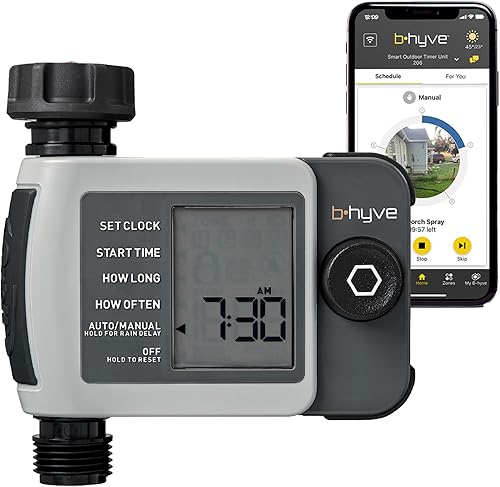
Orbit B-hyve XD smart hose timer (1-port)
Best for: Gardens and beds watered from a hose bib.
- Smart watering without an in-ground system
- Bluetooth works at the faucet
- Check that your bundle includes what remote Wi-Fi control needs
- Remove before hard freezes
Name, photo and listed features checked on Amazon.com on November 14, 2026. We have not tested it; see how we choose.
What a smart hose timer does
A hose timer is a battery-powered valve that sits between the faucet and the hose. At the scheduled time it opens the valve, runs water for a set period and closes it. The smart versions add an app, remote start, rain or weather delays and notifications. There is no wiring, no tool beyond your hand, and no plumbing change, so it is a good fit for renters and for yards without an in-ground system. If you have in-ground sprinklers, a smart sprinkler controller is the equivalent upgrade.
Why bother: EPA says outdoor use makes up about 30 percent of household water use, and more in hot, dry weather. A timer stops the hose that runs all afternoon because someone forgot it.
Bluetooth, Wi-Fi or hub?
| Connection | What you get | Limits |
|---|---|---|
| Bluetooth only | Schedules from your phone, low cost, long battery life | You must be within range to change settings; no remote start or weather feed unless you add a bridge |
| Built-in Wi-Fi | Remote start, weather delay, alerts, voice control | Needs a Wi-Fi signal at the faucet; uses more battery |
| Hub or bridge | One bridge near the house serves several timers; often longer range | Extra cost; check that the hub works with your ecosystem |
| Matter or Thread (where available) | Works with several ecosystems | Few models; check the official list and supported features |
The faucet is often on an outside wall far from the router. Test the signal with your phone at the faucet before buying a Wi-Fi model. If it is weak, see extending Wi-Fi outdoors, or choose a Bluetooth timer with a hub. Follow the FTC’s advice for any connected device: unique password, updates on, two-step sign-in where offered.
Battery life, flow and fit
- Batteries. Most use AA cells. Life depends on how many cycles it runs and on whether Wi-Fi is built in. Look for a low-battery alert in the app and a rated life stated by the maker. Fresh batteries each spring are cheap insurance.
- Thread and gasket. Standard garden hose fittings are 3/4 inch. A flat rubber washer in both the faucet and hose threads prevents leaks. Hand-tighten only.
- Pressure and flow. Check the timer’s minimum and maximum operating pressure and its flow rating. Low-flow drip systems may need a timer that handles low flow, and high-pressure spigots may need a regulator.
- Faucet shape. A timer is heavy. A loose or wobbling faucet can leak or crack under the weight of the timer, hose and water. Support the hose so it does not pull on the spigot.
- Hose bibs with vacuum breakers. Some outdoor faucets have an anti-siphon device on the spout. Check the fit and the timer’s instructions before connecting.
Multiple outlets and watering zones
A single-outlet timer waters one hose. A two- or four-outlet model lets you run separate schedules for the lawn sprinkler, a vegetable bed and a drip line from one faucet. Plan your layout first: which area needs water how often, and does the water pressure support two outlets running at once? If not, stagger the start times so only one runs at a time.
Drip irrigation saves more than a sprinkler
EPA says microirrigation uses 20 to 50 percent less water than conventional sprinkler systems, because water goes slowly to the root zone with little runoff or evaporation. A hose timer is a natural partner. A basic drip kit connects to the hose end with a filter and pressure regulator, then runs tubing to emitters or soaker lines. Example: 20 emitters at 1 gallon per hour for 30 minutes use 10 gallons. A short, early morning drip cycle is gentler on plants than a long evening sprinkler.
Weather, soil and rain
- Weather delay. Wi-Fi models can skip a run when rain is forecast. Check whether the feature is built in or needs a subscription.
- Rain sensor or soil sensor. Some timers accept a sensor input or pair with a soil moisture sensor. A wireless sensor in the bed that stops watering when the soil is already wet adds the most value.
- Watering rules. Many towns limit days and hours for lawn watering in dry seasons. Program the timer to match.
Freezing weather and storage
Water expands as it freezes and can crack the timer, the faucet and the pipe behind it. Before the first hard freeze, turn the timer off, disconnect the hose and timer, drain them, remove the batteries and bring the timer indoors. A frost-free outdoor faucet still needs the hose disconnected so water cannot stay in the pipe. If you leave a hose attached, the pipe can freeze and burst inside the wall. A freeze alert sensor adds a warning.
Check for leaks
A drip at the faucet or hose connection is easy to ignore, but EPA says the average household’s leaks can waste more than 9,300 gallons of water a year. After you install the timer, look at the connection after a run and again after the timer closes. Replace the washer if it drips. A water leak sensor near the spigot inside a garage wall or crawlspace helps catch a pipe leak; see the water leak protection kit.
Products that match each need
Renter or beginner with one garden bed
What to look for: single-outlet Bluetooth timer, AA batteries, low-battery alert, easy thread fit, rain-delay option

Faucet far from the router, wants remote control
What to look for: Wi-Fi or hub-connected timer, weather delay without a subscription, remote start, battery alerts
Lawn, garden and drip line on one faucet
What to look for: two-outlet or four-outlet timer, separate schedules, low-flow handling, pressure rating that matches your spigot
Raised beds and vegetable garden
What to look for: drip irrigation kit with filter and pressure regulator, emitters or soaker line, quick-connect fittings
Frequently asked questions
Do I need Wi-Fi for a smart hose timer?
No. Bluetooth models let you set schedules from your phone within range. Wi-Fi or a hub adds remote start and weather delay, but only works if the signal reaches the faucet.
How long do hose timer batteries last?
It depends on the model, number of runs and whether it has built-in Wi-Fi. Check the maker’s stated life, enable low-battery alerts and install fresh batteries each season.
Can I leave a hose timer outside in winter?
No. Freezing can crack the timer and the faucet. Turn it off, drain it, remove the batteries and bring it indoors before the first hard freeze.
Will a hose timer work with a drip line?
Yes, if the timer works at low flow and you add a filter and pressure regulator to the drip kit. Read the timer’s minimum flow and pressure specs before buying.
Sources
- U.S. EPA WaterSense — Start saving: outdoor water use
- U.S. EPA WaterSense — Microirrigation
- U.S. EPA WaterSense — Fix a Leak Week
- Federal Trade Commission — Securing your internet-connected devices at home
- Amazon.com listing: Orbit B-hyve XD 1-Port Smart Hose Watering Timer - 24511 (ASIN B09YFWNH9Y), checked November 14, 2026
Product names, photos and listed features were checked on the Amazon.com product pages on November 14, 2026. Prices and availability change; the retailer page is always the reference.
Related pages
 GuideIs a smart sprinkler controller worth it? Savings, wiring and setupA smart sprinkler controller can cut outdoor water use by adjusting to weather or soil. Learn what EPA WaterSense says it saves, how to check your…
 KitBackyard smart kit: lights, watering, power and a cameraTwo outdoor smart plugs, a hose timer, wet-rated lighting and a camera: a shopping list for a smarter yard, with realistic prices, safety checks and…GuideOutdoor smart plugs: weatherproof ratings, GFCI and safe loadsAn indoor smart plug is not an outdoor smart plug. Here is how to read the weather rating, protect the outlet, stay within the load limit and keep…
 GuideOutdoor smart lighting: what to buy for the porch, path and yardChoose fixtures rated for wet locations, decide between line-voltage and 12 V landscape lighting, then add schedules and motion triggers that light…
 KitWater leak protection kit for a houseFive leak sensors, an automatic shutoff valve and a hub: the shopping list to catch leaks early and stop them before they flood the floor, with…
 GuideSmart lock for renters: options that leave no traceA retrofit lock keeps your landlord’s key working and comes off with a screwdriver. Here is how to check your lease, your door and your ecosystem…
 Orbit B-hyve XD smart hose timer (1-port)