What temperature to set your thermostat to save money
The Department of Energy points to 68–70°F when you are awake in winter, a setback of 7–10°F for 8 hours a day and 78°F in summer. Here is how to apply those numbers and avoid heat pump and humidity traps.
As an Amazon Associate we earn from qualifying purchases. Product links on this page are affiliate links: buying through them costs you nothing extra and does not change what we recommend.

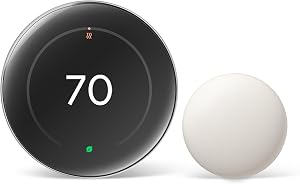
ecobee Smart Thermostat Essential
Best for: Homes with a C-wire, or owners ready to add ecobee’s Power Extender Kit.
- Lower entry price into the ecobee app and schedules
- ENERGY STAR certification, which some utility rebates require
- No C-wire? Budget for the separate Power Extender Kit
- No remote room sensor in the box
Name, photo and listed features checked on Amazon.com on November 14, 2026. We have not tested it; see how we choose.
Winter: the numbers from the Department of Energy
The Department of Energy says you can save energy in winter by setting the thermostat to around 68–70°F while you are awake and setting it lower while you are asleep or away. It adds that you can save as much as 10% a year on heating and cooling by turning the thermostat back 7–10°F for 8 hours a day from its normal setting. Savings are greater for homes in milder climates than in severe ones, because the system has more time at rest.
A starting schedule for a typical weekday:
| Time | Setting | Why |
|---|---|---|
| Wake-up to leaving | 68–70°F | Comfort when you are home |
| Away at work (8 hours) | 7–10°F lower, about 60–62°F | The longest setback is where most of the savings come from |
| Evening | 68–70°F | Return to comfort before you get home |
| Night | 7–10°F lower, about 60–62°F | Blankets are cheaper than heat |
The 60–62°F figures are simple subtraction from 68–70°F, not a rule: check what is comfortable for your household. Infants, older adults and anyone with a health condition may need a warmer floor; follow medical advice.
Summer: raise the setting and add air movement
The Department of Energy says running your air conditioning at 78°F instead of 72°F can save between 6% and 18% on your cooling bill. It also notes that a ceiling fan lets you raise the thermostat setting about 4°F with no loss of comfort. Fans cool people, not rooms, so turn them off when you leave. When you are away, set the thermostat warmer than normal.
What setback depth and timing really do
The savings come from the difference between your setting and the outdoor temperature. The bigger the gap, the faster the house loses heat, so a lower setting always loses less than a higher one. The system then works to recover. That is why recovery time matters more than the exact number: set the schedule so the house is back to your comfort temperature when you wake up or come home. A smart thermostat learns the lead time, and most programmable models can be set to start early.
- Short absences (1–2 hours): setbacks save little and may not be worth it.
- Work days or overnight: the sweet spot, 6–10 hours.
- Several days away: set a wider setback, but keep the house from freezing. Pipes in unheated spaces can be at risk in cold weather; a freeze alert sensor adds a warning.
Heat pumps and electric resistance heat
This is where a setback can backfire. The Department of Energy says setting back a standard programmable thermostat is generally not recommended with heat pumps, because the system may run inefficiently and cancel the savings, and that maintaining a moderate setting is the most cost-effective practice. Some manufacturers offer thermostats designed for heat pumps. The Department of Energy also says that today’s heat pumps can reduce electricity use for heating by up to 75% compared with electric resistance heat, which is why keeping a heat pump running steadily is usually the right strategy. See smart thermostats for heat pumps for the wiring and auxiliary heat details.
Myths that cost money
- “Setting it to 80°F heats the house faster.” Many homes have a single-stage heating system that runs the same way whatever the target, so a higher number just runs longer and overshoots.
- “It uses more energy to reheat than to maintain.” The house loses more heat at the higher temperature, so a setback of several hours still saves. The exception is a heat pump with auxiliary heat, as above.
- “Smart thermostats save energy on their own.” They save through the settings they apply. ENERGY STAR reports an average of 8% on heating and cooling, for certified models. Estimate your own with the smart thermostat savings calculator.
Humidity and comfort
Temperature is only part of comfort. The EPA advises keeping indoor humidity below 60%, ideally between 30% and 50%, to limit mold growth. In summer, air that is cooler and drier feels more comfortable at a given temperature; in winter, a very cold house can lead to condensation on windows and cold walls. If one room is always too warm or too cold, a separate room sensor or a damper issue is likely: see room sensors for uneven temperatures.
Let the thermostat do it
The settings are easy to choose and hard to keep. A smart or programmable thermostat applies them on a schedule, and a smart one can add away detection and occupancy sensing. See smart vs programmable thermostat for what each adds. Your local rules matter too: in a rental, check your lease and local rules before you change the thermostat, and ask about minimum heating requirements if you are leaving the unit empty.
Products that match each need
Forced-air home that leaves the same setting all day
What to look for: scheduling, away detection, ENERGY STAR certification, C-wire or included power adapter, remote room sensor support

Heat pump with auxiliary heat
What to look for: explicit heat pump and auxiliary heat support (O/B, W2), outdoor-temperature lockout for aux heat, compatibility checker

Simple schedule, no Wi-Fi needed
What to look for: 7-day programmable schedule, large display, hold button, correct system type (heat pump models differ)
Frequently asked questions
What temperature should I set my thermostat to in winter to save money?
The Department of Energy suggests around 68–70°F while you are awake and lower while asleep or away. Turning it back 7–10°F for 8 hours a day can save as much as 10% a year on heating and cooling.
What is the most economical summer setting?
The Department of Energy says 78°F instead of 72°F can save 6% to 18% on cooling. A ceiling fan lets you raise the setting about 4°F without losing comfort.
Is it cheaper to leave the heat on low all day?
For most furnaces and boilers, a setback during long absences saves energy, because the house loses less heat at a lower temperature. Heat pumps are different: DOE generally advises a moderate, steady setting.
Does a smart thermostat lower the bill by itself?
Not by itself. The saving comes from lower temperatures at night and when you are away.
Sources
- U.S. Department of Energy, Energy Saver — Thermostats
- U.S. Department of Energy — Top 11 things you didn’t know about saving energy at home: summer edition
- U.S. Department of Energy, Energy Saver — Heat pump systems
- ENERGY STAR — Technical bulletin: ENERGY STAR certified smart thermostats
- U.S. EPA — A brief guide to mold, moisture and your home
- Amazon.com listing: ecobee Smart Thermostat Essential - WiFi Thermostat, Energy Star Certified (ASIN B0DT9MC2Z9), checked November 14, 2026
- Amazon.com listing: ecobee Smart Thermostat Premium - WiFi, Siri & Alexa Built-In, Smart Sensor (ASIN B09XXS48P8), checked November 14, 2026
- Amazon.com listing: Google Nest Learning Thermostat (4th gen) + Nest Temperature Sensor (2nd gen) - Silver (ASIN B0D5BGST5N), checked November 14, 2026
Product names, photos and listed features were checked on the Amazon.com product pages on November 14, 2026. Prices and availability change; the retailer page is always the reference.
Related pages
 CalculatorSmart thermostat savings estimateEnter your heating and cooling costs, the setback you would use and the thermostat price to see a realistic savings range and payback, based on…ComparisonSmart thermostat vs programmable thermostat: is the upgrade worth it?A programmable thermostat follows a fixed schedule. A smart one adds Wi-Fi, learning, away detection and sensors. See which one…GuideSmart thermostat without a C-wire: your real optionsNo C-wire at the wall plate? Most homes can still run a smart thermostat. Check your wiring in ten minutes, pick the fix that fits your system and…
 CalculatorDevice energy cost calculatorEnter watts (or amps), hours of use and your electricity rate to see what any appliance or smart device costs per hour, month and year, standby power…
 CalculatorSmart plug standby savings calculatorPick the devices that sit in standby, say how many hours a day a smart plug would cut their power, and see the dollars saved per year, the plug’s own…GuideEnergy-monitoring smart plugs: what the numbers meanAn energy-monitoring smart plug reports watts, kilowatt-hours and cost for what is plugged in. See what the readings mean, where they fall short and…