Robot mops on hardwood floors: what to check first
Wood and water do not mix well. Before a robot mop touches your hardwood, check your floor finish, the maker’s care instructions, the water flow setting and which cleaners are allowed.
As an Amazon Associate we earn from qualifying purchases. Product links on this page are affiliate links: buying through them costs you nothing extra and does not change what we recommend.
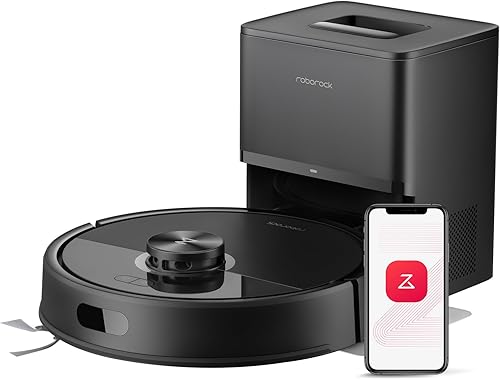
roborock Q7 M5+ robot vacuum and mop
Best for: Small apartments and homes with pets where daily vacuuming matters.
- Self-empty dock suits busy households and pet hair
- Vacuums and mops
- The dock needs floor space and an outlet
- Replacement bags are an ongoing cost
Name, photo and listed features checked on Amazon.com on November 14, 2026. We have not tested it; see how we choose.
Why water is the issue with hardwood
Wood is a material that takes up and gives off moisture. Water that gets into seams or a worn finish can be absorbed by the boards, which can make them swell, cup or discolor. The USDA Forest Products Laboratory’s Wood handbook is a standard reference on how wood relates to moisture, and the National Wood Flooring Association publishes technical guidelines on moisture and wood flooring. The practical point is simple: the less standing water on the floor, the lower the risk.
Robot mops differ widely. Some wipe with a lightly damp microfiber pad. Others spray or drip from a tank onto a spinning pad, and some pad systems keep a wet pad in contact for long periods. That difference is the first thing to compare.
Step 1: Find your flooring’s care instructions
- Identify the floor. Solid hardwood, engineered wood, laminate and luxury vinyl plank (LVP) have very different water tolerance. Look in your lease, closing paperwork or product label, or ask your landlord or builder.
- Identify the finish. Surface-sealed finishes (like polyurethane) resist water better than oiled or waxed finishes, which can mark.
- Find the manufacturer’s care page or warranty. Many state which cleaning methods are allowed. If the instructions say “do not wet mop,” do not use a robot mop, even in a low-water mode.
- If you rent, check your lease for flooring clauses and ask the landlord what the floor is and how they want it cleaned. Rules and damage claims vary; ask if unsure.
- Look at the condition. Worn finish, gaps between boards and chipped edges let water in; skip mopping there.
Step 2: Control the amount of water
For wood floors, the water setting matters more than any other spec.
- Adjustable water flow in at least three levels, set in the app, with a lowest setting that leaves a floor nearly dry within a minute or two.
- A pad that is only lightly damp and does not drip. If water pools anywhere behind the robot, the setting is too high.
- Fast movement over a spot rather than spinning in place. Lingering is what soaks a seam.
- A clear tank and a reliable shutoff so that water stops flowing when the robot stops or is lifted. Check that the robot does not leak when parked.
- Lifted or removed pad on carpet. See robot vacuums on thick carpet.
Begin with the lowest setting and a small area. Wipe a dry cloth over the path afterward: if the cloth picks up noticeable moisture, reduce the setting or switch to vacuum only.
Step 3: Choose cleaning solution carefully
Use only products the robot’s maker and the floor’s maker allow. Many robot mops say to use plain water or the maker’s own solution, and some warn that other detergents can damage the pump or leave residue. The EPA lists household cleaning products as a source of indoor air pollutants that can linger after use, so do not add extra cleaners; more soap does not clean better and leaves a film on a sealed floor. Never add vinegar, bleach or essential oils unless both manufacturers say they are fine.
Step 4: Set up routines that protect the floor
- Vacuum first. Grit under a wet pad scratches the finish. If the robot has a vacuum-then-mop mode, use it.
- Mop less often than you vacuum. Once or twice a week is plenty for many homes; sticky spots can be spot-cleaned.
- Draw no-go zones around areas near sinks, dishwashers, refrigerators with water lines and pet water bowls, where leaks are more likely.
- Use the app’s room list to restrict mopping to rooms that have sealed tile, vinyl or laminate if you worry about wood.
- Wash and dry pads after each run. A dirty pad smears.
- Do not leave a damp pad on the floor when the robot is docked; choose a base that lifts or dries the pad.
Table: which floor, which approach
| Floor | Typical approach |
|---|---|
| Sealed solid or engineered hardwood | If the maker allows damp mopping: lowest water level, vacuum first, short runs |
| Oiled or waxed wood | Avoid wet mopping unless the maker says it is fine; use vacuum only |
| Laminate | Very low water; moisture can swell the core at seams; follow the maker’s instructions |
| Luxury vinyl plank | Many allow damp mopping; confirm with the maker |
| Tile and sealed stone | Usually the most tolerant, but check grout and stone sealing |
Alternatives if wet mopping is not allowed
You can still use a robot on a floor that cannot be wet mopped. A vacuum-only robot, or a robot with the mop module removed, plus a dry microfiber pad covers dust. For sticky spots, spot-clean by hand with a damp cloth that you wring out. See the robot vs stick vacuum comparison for how a cordless vacuum with a soft roller can cover the rest.
Products that match each need
Sealed hardwood where damp mopping is allowed
What to look for: adjustable water flow with a very low setting, a pad that does not drip, no-go zones, vacuum-before-mop mode

Mixed floors with rugs
What to look for: mop pad that lifts on carpet, mop module you can detach, room-by-room settings in the app

Floors that cannot take water
What to look for: vacuum-only robot or removable mop, dry microfiber pad option, soft brush roller for hard floors
Spot cleaning on wood
What to look for: spin-and-wring microfiber flat mop or a dry-damp pad you wring out by hand
Frequently asked questions
Is a robot mop safe for hardwood floors?
It can be on sealed hardwood if the floor maker allows damp mopping and you use the lowest water setting. If the care instructions say not to wet mop, use vacuum only.
How much water should a robot mop use on wood?
As little as possible: the floor should look nearly dry within a minute or two. If you see puddles or damp streaks, lower the setting.
Can I put floor cleaner in a robot mop?
Only if both the robot’s maker and the flooring maker allow it. Many robots specify plain water or their own solution.
Is a robot mop safe for laminate?
Laminate is sensitive to water at the seams. Follow the maker’s instructions and use very low water or no mopping at all.
Sources
- USDA Forest Service, Forest Products Laboratory — Wood handbook: Wood as an engineering material (FPL-GTR-282, 2021)
- National Wood Flooring Association — Technical guidelines and publications (includes “Moisture & Wood”)
- U.S. EPA — Introduction to indoor air quality
- Amazon.com listing: roborock Q7 M5+ Robot Vacuum and Mop, Up to 7-9 Weeks Self-Empty, 10000Pa (ASIN B0DWX69JVG), checked November 14, 2026
- Amazon.com listing: Shark PowerDetect Self-Empty Robot Vacuum, Black, AV2820S (ASIN B0CDJFHM4J), checked November 14, 2026
Product names, photos and listed features were checked on the Amazon.com product pages on November 14, 2026. Prices and availability change; the retailer page is always the reference.
Related pages
 GuideRobot vacuum for pet hair: what to look forPet hair tangles brushes, fills small bins and spreads when a robot meets an accident. Check brush design, bin size, filter and obstacle detection…ComparisonRobot vacuum vs cordless stick vacuum: what each does wellA robot keeps floors tidy every day while you are out; a cordless stick vacuum does the deep clean, the stairs and the spills. See which one fits…KitRobot vacuum upkeep kitThe small purchases that keep a robot vacuum cleaning: spare filters and brushes, boundary strips, cord control and sensor-cleaning supplies, with…GuideRobot vacuum for thick carpet and rugs: what to checkThick carpet defeats many robot vacuums. Learn what suction numbers really tell you, how to read climbing height and what to do with shag rugs…ComparisonLidar vs camera robot vacuums: how each one navigatesLidar maps a room with a laser; camera-based robots map with images. They differ in darkness, obstacle recognition and privacy. See what each means…GuideRobot vacuum for a small apartment: size, noise and dockA small apartment needs a robot that fits under furniture, docks in a tight spot and runs without annoying neighbors. Here are the measurements and…